The Tata Electronics Breach Is a Warning for Every Indian Vendor and Startup
By Aditya Kumar— Founder & CEO, CyberSharcx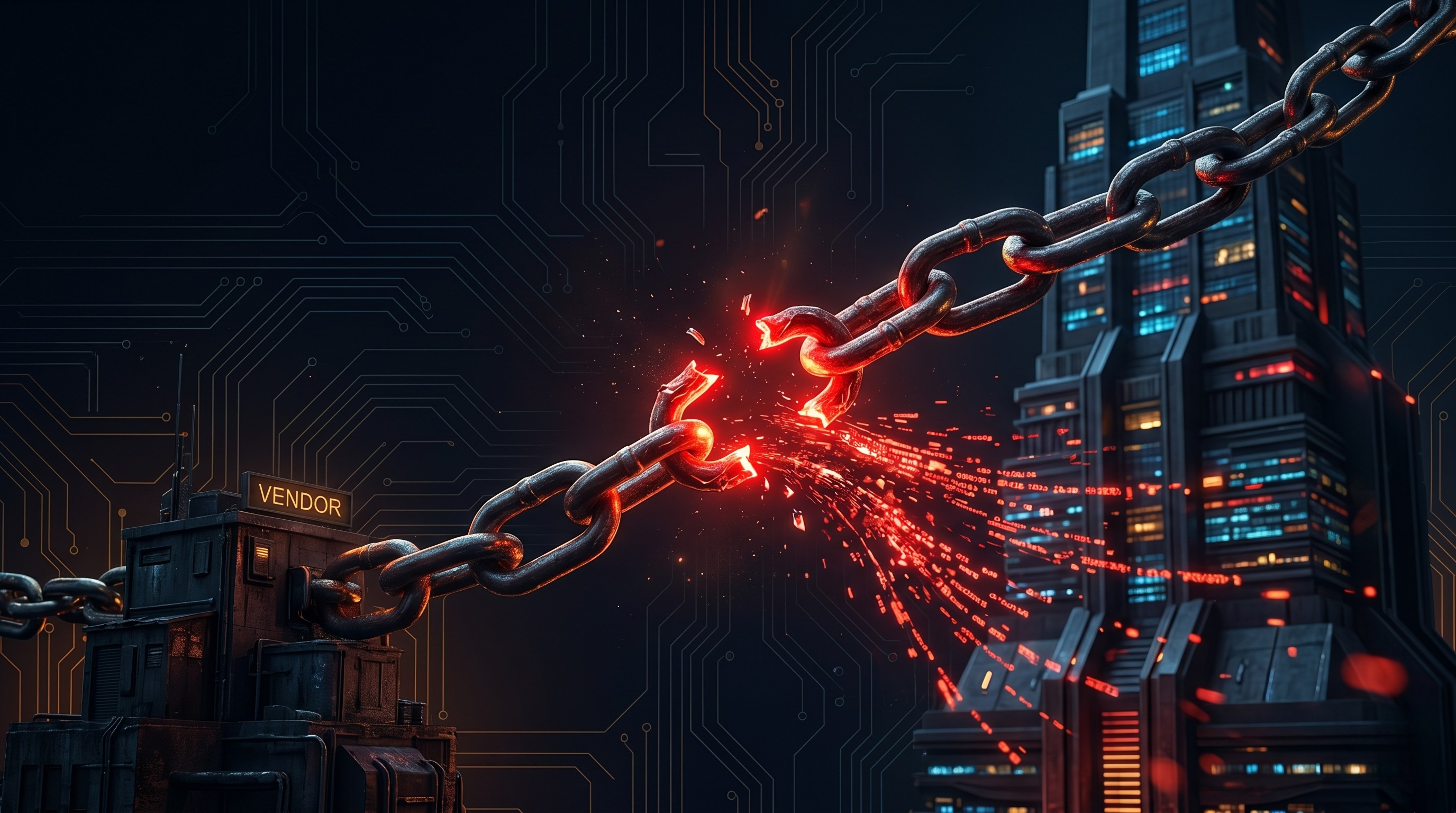
Yesterday, Tata Electronics confirmed what security researchers had already discovered. The ransomware group World Leaks had published more than 200,000 files on the dark web — over 630 gigabytes of data allegedly stolen from Tata Electronics' systems. Inside that data: component designs, manufacturing specifications, internal communications, and confidential documents linked to Apple and Tesla. Employee passport copies were in there too.
Tata Electronics is one of Apple's most important manufacturing partners in India. Apple is now investigating the breach. A ransom demand was issued. Tata declined to comment on specifics.
This is not a story about a large company having a bad week. This is a warning about how modern ransomware attacks work — and why the next target is more likely to be a 50-person Indian vendor than a Tata subsidiary.
What Actually Happened — The Supply Chain Attack Model
World Leaks did not invent anything new here. They used the same playbook that has produced nearly every major breach in 2025 and 2026.
The pattern is this: attackers no longer target the largest, most secure organization in an ecosystem directly. They find a connected party — a vendor, a contractor, a BPO, a supplier — with weaker defenses and trusted access to the real target. They get in through that weaker party. Then they move.
This is called a supply chain attack, and it is now the dominant attack method against large organizations globally.
In April 2026, Adobe was breached through an Indian BPO firm contracted for customer support operations. The attacker delivered a remote access tool via phishing, escalated to a manager's account, and extracted 13 million customer support tickets. Adobe's own infrastructure was not directly compromised. Their vendor was.
In 2025, ICICI Bank was targeted through a third-party vendor portal. Two major US banks were hit in the same month through a single shared vendor. In every case, the front door of the primary target held. The attacker walked in through a side door they had been given a key to.
Tata Electronics fits this pattern exactly. The files leaked are not Tata's alone — they contain Apple and Tesla IP because Tata was trusted with that IP as part of the manufacturing relationship. The breach of one Indian company exposed the confidential data of two of the world's most valuable corporations.
Why Indian SMEs and Vendors Are Now the Primary Target
Here is the logic that every attacker follows.
A large enterprise — an Apple, a major bank, a government department — has invested heavily in security. Getting in directly is difficult and expensive. But that enterprise has hundreds of vendors, contractors, and service providers. Each one has some level of trusted access. Most of them have significantly weaker security than the primary target. Finding the weakest link in that supplier ecosystem and attacking through it is easier, faster, and increasingly effective.
Indian SMEs are overrepresented in this vulnerable supplier category for three reasons.
First, India's outsourcing economy means millions of small Indian companies hold trusted access to large domestic and international clients. KYC vendors, BPOs, logistics contractors, IT service providers, manufacturing sub-suppliers — all of them have integrations, credentials, or data access that makes them a viable entry point to a larger target.
Second, the security posture of most Indian SMEs does not match the access they have been granted. A 40-person BPO handling support tickets for a global software company is not running the same security stack as that software company. But they have access to the same customer data.
Third, the consequences land disproportionately on the Indian vendor. When the supply chain attack is traced back, the vendor loses the client relationship, faces regulatory exposure under the DPDP Act, and in many cases does not survive the fallout. The larger company issues a statement and continues operations. This is exactly what is playing out with Tata and Apple right now — and Tata is large enough to absorb it. Most Indian SMEs are not.
What Your Startup Needs to Understand About Its Own Risk
If your business provides services to a larger company — any larger company — you are a potential supply chain attack vector. That is not speculation. That is the threat model that every ransomware group is operating from in 2026.
Ask yourself the following:
Do you have client credentials stored in your systems? Do you have API integrations that connect your infrastructure to a client's infrastructure? Do you handle client data — financial records, customer information, internal documents? Do you use shared credentials or do employees have individual logins to client systems?
If any of these are true, an attacker who compromises your environment can potentially reach your client's environment. You are not just a target for your own data. You are a target because of what your access enables.
The Indian BPO firm breached in the Adobe incident was not targeted because of anything it owned. It was targeted because a single support agent had the ability to export 13 million records in one API query. That architectural gap was in the BPO's environment, but the data that walked out the door was Adobe's.
The Detection Problem That Makes This Worse
Supply chain attacks are difficult to detect because they begin with legitimate access. The attacker, once inside your environment, does not look like an attacker. They look like your employee using your tools.
Traditional security approaches that focus on blocking known-bad signatures or flagging known-malicious IPs will miss this. The initial access is usually through phishing or compromised credentials — so there is no malware signature to catch. The subsequent activity looks like normal user behavior — browsing files, accessing databases, running queries.
What changes the picture is behavioral monitoring. An employee account that suddenly starts accessing systems it has never touched before. A query that pulls 50,000 records at 2 AM. A login from a new device or unusual location. A service account that has been dormant for months suddenly becoming active.
These are the signals that precede a data exfiltration event. They appear in the reconnaissance phase — before the ransomware is deployed, before the data is exfiltrated, before the dark web posting goes up.
A honeypot-based early warning system works particularly well against supply chain attackers because once an attacker is inside a network and mapping it, they will inevitably probe systems they have no legitimate reason to access. A decoy server that looks like a database server is exactly the kind of thing an attacker will try to access during reconnaissance. The moment they do, you have your signal — while they are still in the early stages and before the damage is done.
Tata Electronics said its response protocols were deployed immediately once the incident was detected. What that statement does not answer is how long the attacker was inside before detection. The 630 gigabytes of data that ended up on the dark web had to travel somewhere. That takes time. That time is the window that early detection is designed to close.
What to Do If You Are an Indian Vendor or Supplier
The Tata Electronics breach is a specific event. The supply chain attack model is a permanent feature of the threat landscape. Treat it accordingly.
Audit every integration you have with client systems. Map which employees have access to what, and whether that access is still necessary. Credential sprawl — employees who have accumulated access over months or years to systems they no longer actively use — is one of the most common attack surfaces exploited in supply chain incidents.
Separate your internal environment from client-facing access. The employee who handles client support tickets should not have access to your internal financial systems, and vice versa. Flat networks where a single compromised account can reach everything are a liability you cannot afford if you hold client data.
Implement behavioral monitoring on accounts with privileged access. Any account that can touch client data needs activity logging. If that account starts behaving unusually — accessing new systems, pulling large volumes of data, operating outside normal hours — you need to know about it within minutes, not months.
Review your client contracts for breach notification requirements. Most enterprise clients now have contractual requirements that vendors notify them within specific timeframes if a breach affecting their data occurs. Under the DPDP Act, you also have obligations toward affected users. Know both sets of requirements before an incident forces you to discover them under pressure.
Document what data you hold on behalf of clients and where it lives. You cannot protect what you have not mapped. A clear data inventory is the starting point for both security controls and breach notification.
Frequently Asked Questions — Supply Chain Attacks and Indian Vendors
What is a supply chain attack in cybersecurity? A supply chain attack is when an attacker targets a vendor, contractor, or third-party service provider to gain indirect access to the attacker's real target. Rather than attacking a secure organization directly, attackers find a connected party with weaker defenses and use that as the entry point.
Does the Tata Electronics breach affect other Indian companies? The breach is a signal, not an isolated incident. The same ransomware group previously hit Nike and Dell. The pattern — attacking companies with trusted access to larger targets — is specifically increasing in India because of the country's large vendor and outsourcing ecosystem.
How can Indian SMEs protect themselves from supply chain attacks? The most important steps are auditing third-party access, implementing behavioral monitoring on accounts that touch client data, separating internal and client-facing environments, and deploying early detection tools that flag unusual activity during the reconnaissance phase — before data is actually exfiltrated.
What are the DPDP Act implications of a supply chain breach? If your company processes personal data on behalf of a client and that data is exposed in a breach, you have obligations under the DPDP Act 2023. These include notifying the Data Protection Board and affected individuals promptly. Failure to implement adequate security safeguards carries penalties of up to ₹250 crore.
What is World Leaks ransomware group? World Leaks is a ransomware group that has claimed responsibility for breaches at Nike in January 2026, Dell in July 2025, and now Tata Electronics in June 2026. The group publishes stolen data on a dark net website to pressure victims into paying ransom demands.
How do honeypots help detect supply chain attackers? Once a supply chain attacker is inside a vendor's network, they map the environment before exfiltrating data or deploying ransomware. During this mapping phase, they probe systems indiscriminately — including decoy systems. A honeypot that logs this probe gives the vendor an early warning before the attacker reaches real systems or data.
CyberSharcX is an early-warning cyber threat detection platform for Indian startups and SMEs. If your business holds client data or maintains integrations with larger companies, early detection is not optional — it is the only way to catch a supply chain attacker before the damage is done. Learn more at cybersharcx.in